
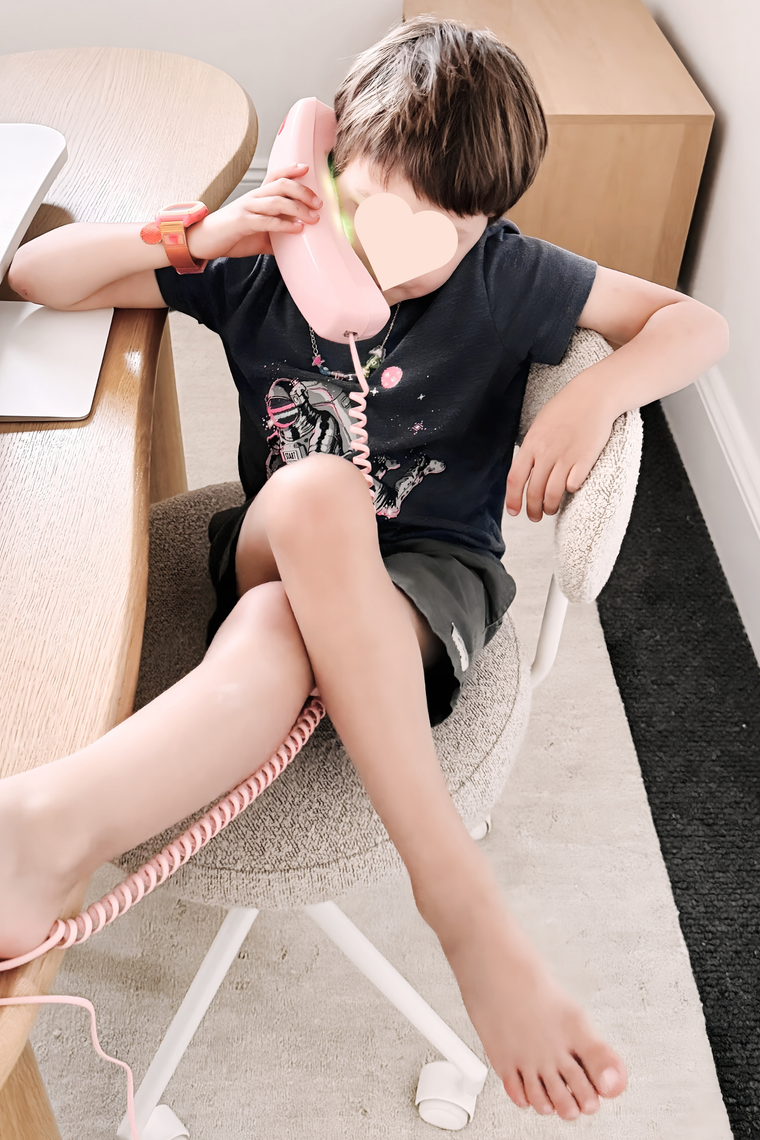
"My six-year-old asked me for a phone"
A few months ago, my six-year-old asked me for a phone.
It really spooked me — the allure of that device is so strong, even at six. When I asked why, he said, "So I can call my friends, like you do."
That made me stop. He didn't want games or social media. He wanted connection. The same kind of belonging we all crave. But when I looked around, there wasn't a single tool made for kids that let them connect safely. Every path led to the internet, and the internet, as any parent knows, wasn't built for children.
The problem with "kid-safe" tech
I've worked in technology for twenty years. I know how most apps are designed: to reward endless scrolling, push kids down algorithmic rabbit holes, and quietly create dependence. Behind the cute emojis and "kid-safe" settings, the design goals are the same — keep them online longer.
And once they're online, everything accelerates. Researchers like Jonathan Haidt (The Anxious Generation) have documented what's happening to kids inside those screens. Anxiety, isolation, and delayed social development are all rising. Between ages six and thirteen — when kids are building their sense of self-worth — screens enable endless comparison and quietly rewire how they learn empathy, patience, and the rhythm of real conversation.
Texts replace tone. Emojis replace vocabulary. Likes replace listening.
The safe, one-on-one conversations where kids test out who they are get replaced by group chats and public feeds — where bullying thrives.
A different kind of connection
I'm not anti-technology, and I'm not even anti-social media. I just wanted to delay the pull of that phone until my son was developmentally ready for everything that comes with it.
So after a lot of late nights and a bit of creative engineering, we installed an old-school landline that made calls over Wi-Fi. Suddenly my six-year-old was calling Grandma every night before his bath. My heart melted.
When we were kids, the home phone was a lifeline. We'd spend hours talking to friends, grandparents, cousins — learning how to listen, interrupt politely, fill silences, laugh together. Those calls built social muscles that screens can't.
That's why we're building Landie
A new kind of home phone made just for kids.
No screens. No algorithms. No internet.
Just voices. Just connection.
Because childhood shouldn't need a safety filter. It just needs a fun, safe way to connect.